
Starting Business
Why you want to go into business
The reasons for starting a business is as varied as the people who create them. As with every big decision, there are many factors involved, people to seek advice, approvals granted. The most important questions to asked in life always start with the word WHY. Why do you want to take such a risk?

Explaining the Four Reasons Lifestyle
Lifestyle companies are common and can be profitable. The reasons range from a smaller self-owned version of business from which you have retired to people who want to profit from their hobby, such as a fisherman teaching fly-casting classes, or a retired venture capitalist who wants to keep a hand in that world managing his own money. Typically, lifestyle businesses do not survive over generations and are not typical targets for investment as they are structured around the founder and their unique skills, contacts, and interests.
An Empty Niche?
An Empty Niche business model is one in which you believe the product or service is either revolutionary to the market or is unavailable in your geographical region. In either case, investment from outside sources is possible and the development of a resilient organizational structure is advised. In an Empty Niche’ model, you can build your company from the ground up, or, if there is a model you already like, you can rent a business model by becoming a Franchisee of an already well-established business.
Building Equality
Starting a business solely to build equity means that you are less interested in the type or cash flow of the business but want to build the business’ value by creating or acquiring properties to attract a larger company to buy your whole business with its assets. Serial Entrepreneurs and Innovators of new technology who do not wish to produce their invention are usually interested in this kind of model. If their ideas are proven profitable, this model is a prime target for investment capital from a variety of sources.
Asset Protection
The term “Tax Shelter” is loaded with many preconceptions – and misconceptions, too. There are many reasons that people are interested in structuring a business around tax issues, or asset protection,including wealth management and inheritance transition. This is a highly specialized type of company and the help of an accountant, a lawyer, or both is required.
“I am only losing a dollar a piece on each of them so if I can just sell more, I’ll be rich!” –Fool’s adage
Logistics
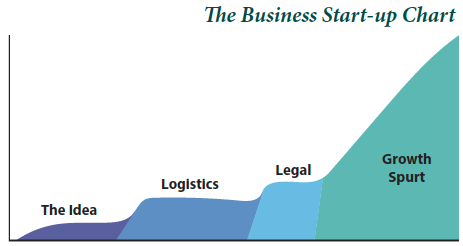
Once you have your product or service idea sorted out, you have to put together the means to execute your company’s core strength –the how-tos of making its “Special Sauce.” Logistics includes the partnerships, vendors, and specialists you will need to put together the budgeting, marketing, production, and sales required to get the job done. You can think of it as lining up the resources you need and making sure they all can interact towards a successful end.
Legal – Doing if yourself or seeking counsel
In the United States, the laws that govern a corporation are determined by two primary entities and a handful of specialty groups. The two entities that demand your attention are the Secretary of State in the place you will do business and the IRS. Please see the QR codes to the left. Your level of comfort in dealing with these issues coupled with your type of business you want will determine if you need legal counsel. If you want a simple lifestyle business, this is a straightforward matter. If you are planning to have investors, partners or to sell the business in the future, professional guidance should be sought. Praxis can help you determine which path might be the best for your situation.
Getting down to making money
Now that you have all of the preliminary parts in place, let’s get down to making money. This is important: your focus needs to be on profit and not revenue. As the old formula states:
Revenue – Costs = Profits
While the formula is easy, forecasting what your costs and revenues will be is very complex. Many circumstances cannot be foreseen, most can. In starting your business, the more you know about the demands upon you, in both time and funds, the better. The positive rewardremaining after these factors are considered is called your projected Return on Investment (ROI) and is the goal of almost all Start-Up companies. An ROI can be anything that you value: money, time, prestige, or a legacy you wish to pass on.